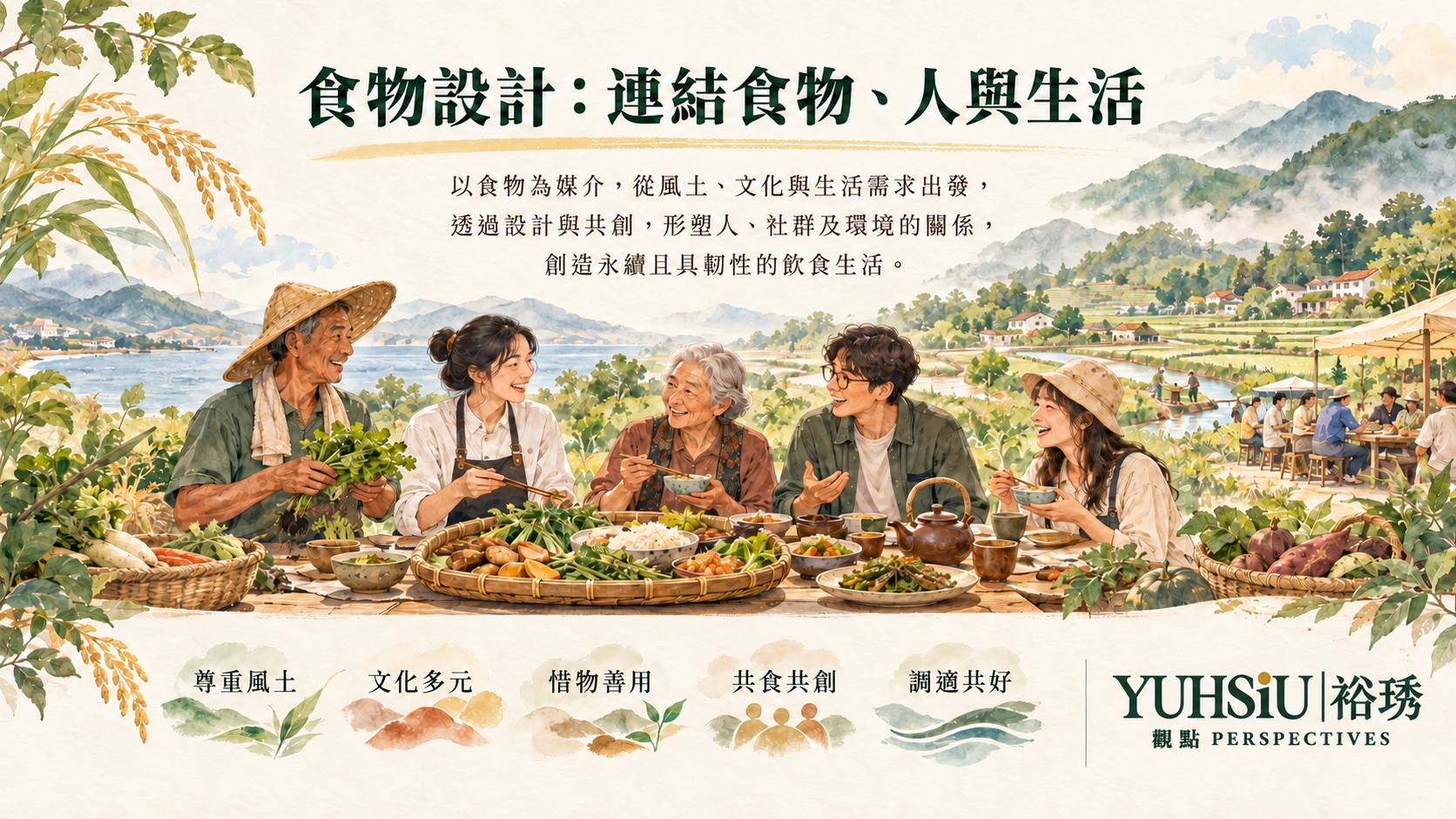
Food design connects ingredients, culture and people's needs through the design of products, services and experiences. Drawing on Ivy Tseng’s more than two decades of experience exploring Taiwan’s terroir, advancing industry–academia innovation and engaging in place-based practice, this framework identifies seven design types and five value goals that can be adapted to different places and contexts.
Food Design — Definition Food design uses food as a medium, drawing on terroir, culture and everyday needs. Through design and co-creation, it shapes relationships among people, communities and the environment to create sustainable and resilient foodways.
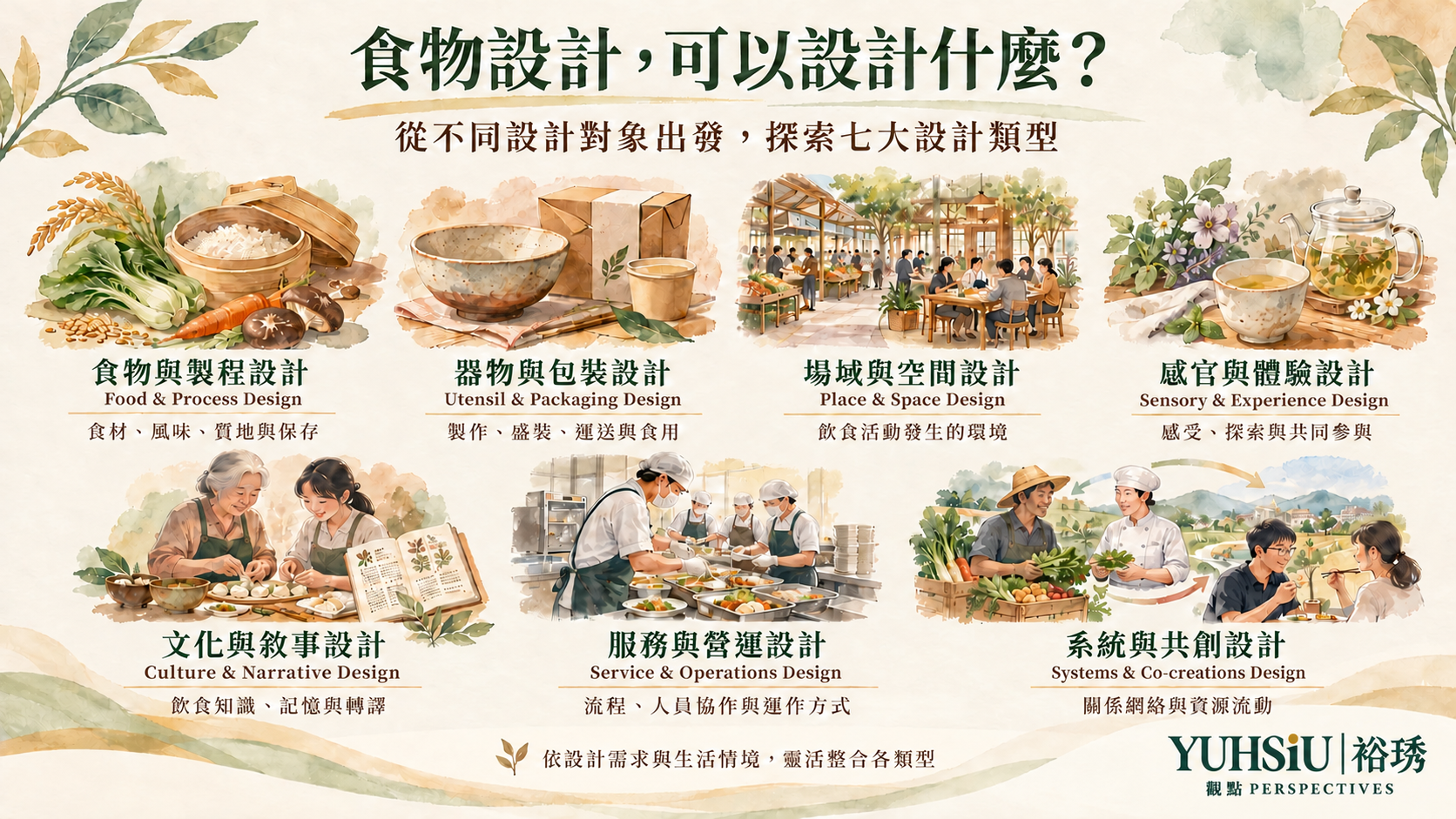
Designing ingredients, flavour, texture, preparation and preservation to meet eating needs and create new uses for food resources. Examples include developing sauces from water snowflake and processed products from cosmetically imperfect wax apples.
Designing utensils, tools, containers and packaging that support food preparation, protection, transport and consumption. Function, usability, clear information and resource use are considered alongside appearance.
Designing the settings in which eating, learning and interaction take place. Layout, equipment and atmosphere connect activities with local identity, as illustrated by educational tourism factories and place-based dining experiences.
Designing sensory and participatory experiences through sight, sound, smell, taste and touch. The seven-sense approach also includes emotional meaning and memory, and connection through making, sharing and participating together.
Communicating food knowledge, local stories and skills through products, menus, displays and learning materials. Cultural translation makes these meanings accessible while keeping their origins and communities visible.
Designing how food services are prepared, delivered and maintained. Workflows, staff roles, quality and costs must fit real operating conditions, from convenience-store meal development to visitor experiences.
Designing collaboration across growers, processors, food businesses, educators, consumers and local communities. Shared needs, resource connections and clear responsibilities support lasting partnerships and local development.
Good food design begins with intended value: who it serves, what needs to change and how progress will be assessed. Set priorities among the five value goals, then choose suitable design types and methods. Evaluate prototypes against those goals, acknowledge trade-offs and refine the design through evidence and feedback.
點選圖片可開啟大圖。
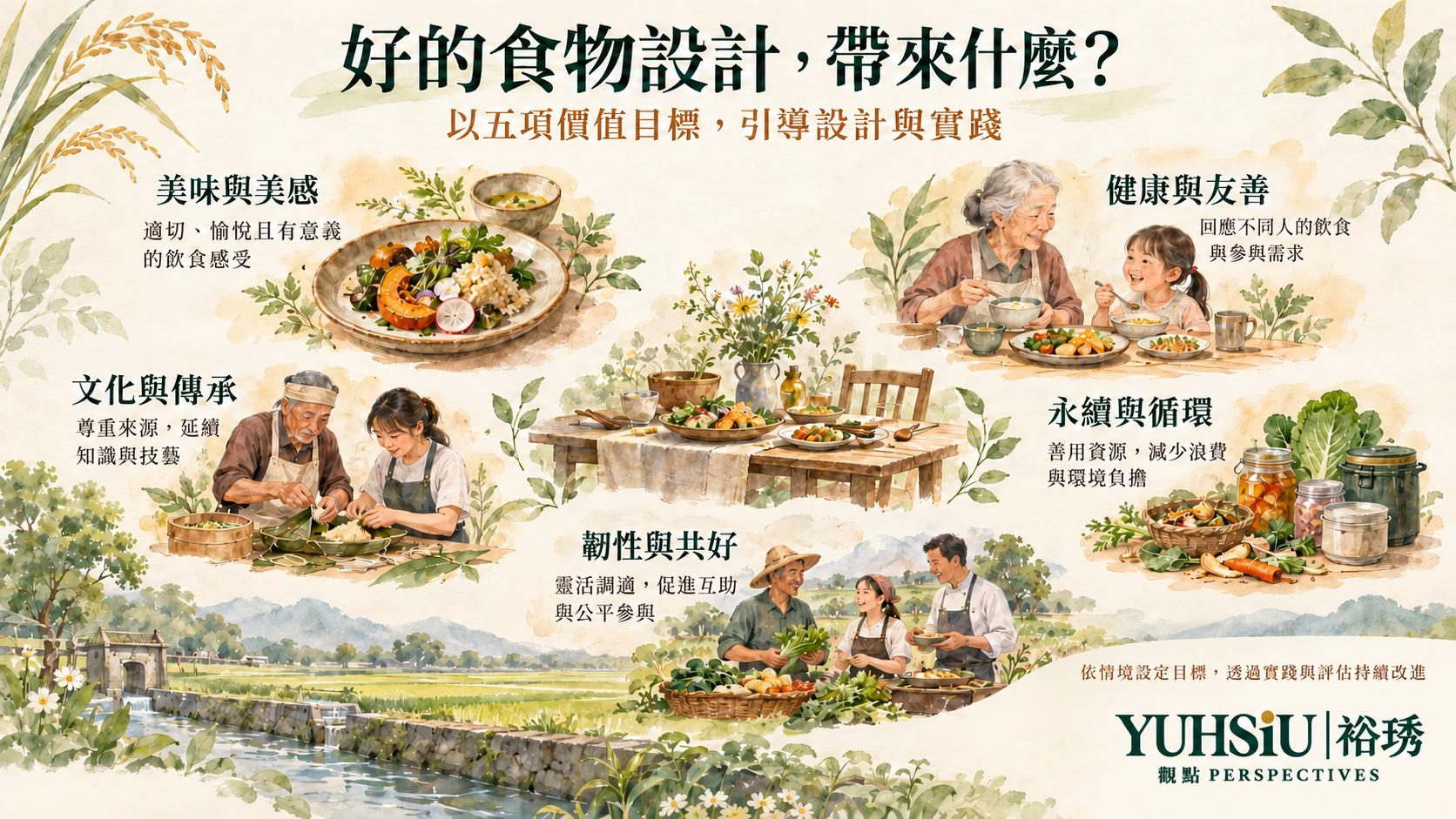
美味與美感
Taste & Aesthetics
讓食物具有合適的風味、口感與呈現。
結合料理品質、視覺表現與用餐情境,回應不同對象的期待,形成愉悅且有意義的飲食經驗。
Create enjoyable and meaningful eating experiences through flavour, texture, presentation and context.
健康與友善
Health & Inclusivity
回應不同人的飲食與參與需求。
考慮年齡、飲食習慣、身體條件與食用便利,兼顧食品安全,讓更多人能舒適地使用與參與。
Address different dietary and participation needs through food safety, accessibility and ease of use.
文化與傳承
Culture & Heritage
尊重食物來源,延續知識與技藝。
保留食材、料理與技術的文化背景,透過記錄、創新與世代交流,讓地方記憶持續被理解與運用。
Respect food origins and sustain local knowledge, skills and memories through documentation and exchange.
永續與循環
Sustainability & Circularity
善用資源,減少浪費與環境負擔。
從食材取得、製作、保存、包裝到使用後處理,尋找減少耗損與循環利用的方法,並檢視實際效果。
Use resources thoughtfully, reduce waste and assess opportunities for reuse and circular practices.
韌性與共好
Resilience & Shared Well-being
因應變化,支持互助與共同發展。
面對季節、供應或環境變動,保留調整的能力,並透過合作、分享與公平參與,支持社群與地方持續發展。
Build capacity to adapt to change while supporting cooperation, fair participation and shared well-being.
Food design is an iterative process: define value goals, understand context, frame the challenge, prototype, evaluate and refine. Feedback can lead back to any earlier step.
Start with value, learn from real situations, co-create with respect, test at a small scale, plan for safety and feasibility, and use evidence to guide improvement.